
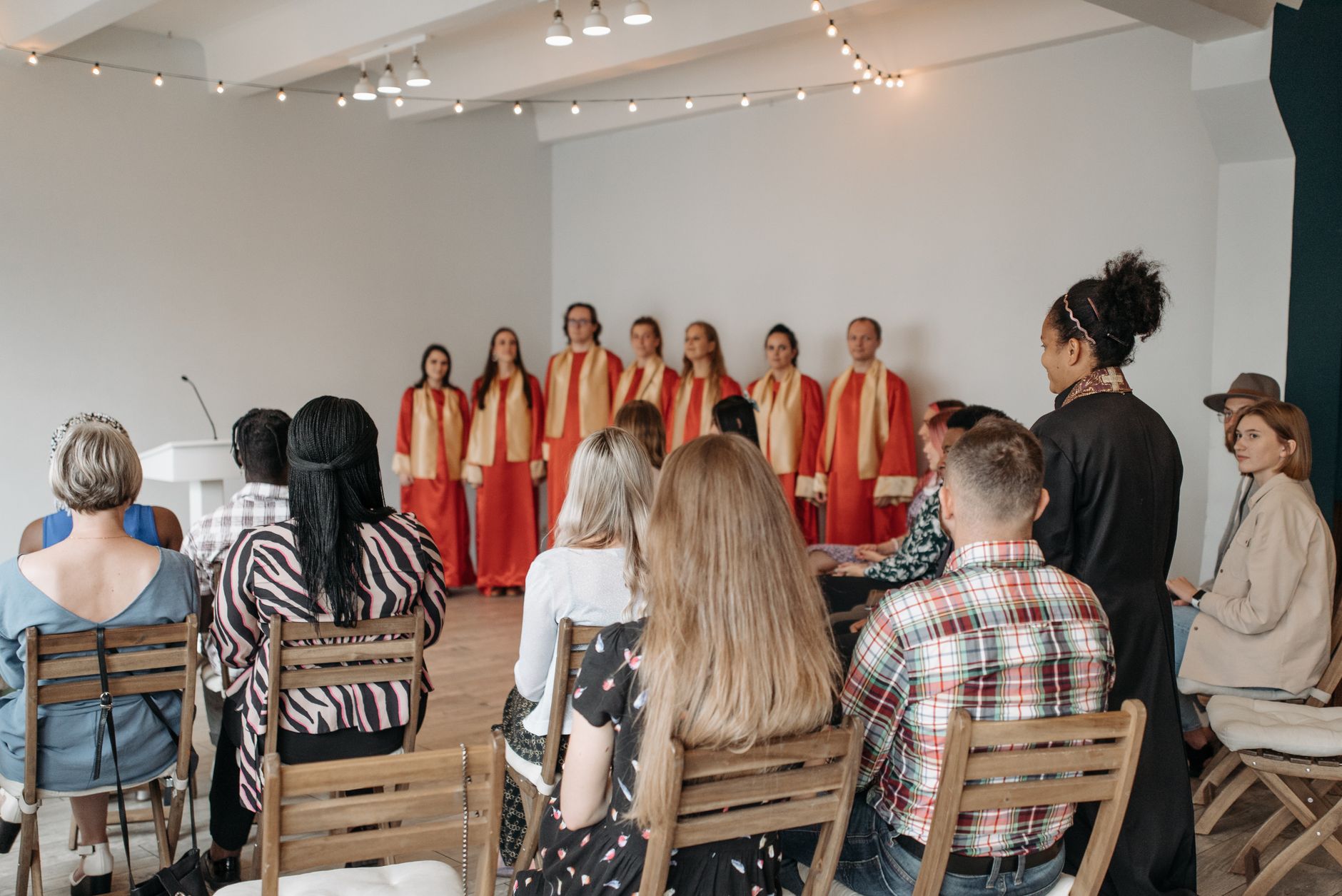
Learning how to join a community choir is far simpler than most people assume, and it rarely involves the nerve-shredding audition that keeps beginners away. Across the UK there are roughly 40,000 amateur singing groups, and the majority will take a new member on a Tuesday evening with nothing more than a name and a mobile number. Understanding how to join a community choir comes down to four practical steps: finding groups within a sensible travel radius, checking whether they audition, attending a taster rehearsal, and deciding which voice part suits your range. Term fees typically run between £30 and £90, rehearsals last 90 to 120 minutes, and most choirs perform two or three concerts a year. This guide covers the search, the money, the etiquette and the wider community life that singing tends to open up.
What a Community Choir Actually Is
A community choir is an open-access, non-auditioning or lightly-auditioning singing group run for enjoyment rather than professional standard. Membership usually spans ages 18 to 80, and a typical group holds between 25 and 90 singers. Repertoire ranges from Handel and Rutter to Fleetwood Mac arrangements, gospel standards and film scores.
The distinction matters when you are choosing. Chamber choirs and cathedral consorts expect fluent sight-reading and hold competitive auditions; community choirs teach by ear, supply rehearsal tracks and accept singers who have never opened a score. Roughly seven in ten UK community choirs describe themselves as entirely non-auditioning.
Musical directors are usually paid £40 to £80 per rehearsal, funded by member subscriptions. That single fact shapes everything else: term fees, concert ticket prices and whether the choir can afford a professional accompanist. Smaller groups rely on a volunteer pianist or backing tracks played through a Bluetooth speaker at the front.
The Main Types of UK Community Choirs
Rock and pop choirs teach three-part harmony by ear and charge monthly rather than by term. Traditional choral societies tackle Messiah or the Fauré Requiem with a hired orchestra. Barbershop and Sweet Adelines groups sing a cappella in four parts. Sea shanty, gospel and world-music choirs sit somewhere between the two extremes.
Where to Find a Choir Near You
The first practical step in how to join a community choir is a structured search. Start with three databases: Making Music, which lists over 3,000 member groups; the Association of British Choral Directors directory; and your county music service. A postcode search returns most formally constituted choirs within a 15-mile radius.
Offline sources catch the rest. Village hall and library noticeboards carry more choir adverts than any website, partly because village hall hire cost uk figures — commonly £8 to £25 per hour — make halls the default rehearsal venue for small groups. Church porches and GP surgery boards work in exactly the same way.
Local government channels help too. Minutes published under parish council meeting rules uk often name the groups that hire council-owned buildings, which is a reliable way to find choirs with no online presence at all. The same minutes list grant recipients, another useful signal that a group is active, solvent and recruiting.
- Making Music and abcd directories, searched by postcode
- Village hall, library and church porch noticeboards
- Parish and town council minutes naming regular hall hirers
- Town Facebook groups, searched for choir, singing or harmony
- Programmes from last summer’s local festivals and fetes
The Joining Process: Tasters, Voice Parts and Auditions
The mechanics of how to join a community choir vary less than you might expect. Nearly every group offers a free taster of two or three rehearsals before you commit to a subscription. You email the membership secretary, arrive 15 minutes early, and someone hands you a folder and points at an empty chair.
Voice parts are assigned rather than chosen. Women are usually placed in soprano or alto, men in tenor or bass, though many groups now use the neutral labels top, second, third and bottom line. If your range straddles two parts, sit in the one short of numbers; directors will always take another tenor.
Auditioning choirs run a ten-minute voice check rather than an audition in the talent-show sense. You sing a scale, echo a few intervals and read a short phrase. The purpose is placement and blend, not rejection. Choral societies attached to a cathedral or a large orchestra are the main competitive exception.
| Choir type | Audition | Typical cost | Repertoire |
|---|---|---|---|
| Rock and pop choir | None | £25-£35 per month | Chart, soul, film |
| Choral society | Light voice check | £60-£90 per term | Oratorio, requiems |
| Gospel choir | None | £30-£50 per term | Gospel, spirituals |
| Barbershop chorus | After 6-8 weeks | £15-£25 per month | A cappella four-part |
| Chamber choir | Full audition | £40-£70 per term | Renaissance, modern |
What Happens in a Voice Check
Expect a piano, the director and no audience whatsoever. You sing up and down a five-note scale to find your comfortable range, echo three or four pitches to test your ear, and sometimes sing a verse of a hymn or a song you already know well. Fifteen minutes, no preparation, no sight-reading.
Costs, Commitment and What You Get Back
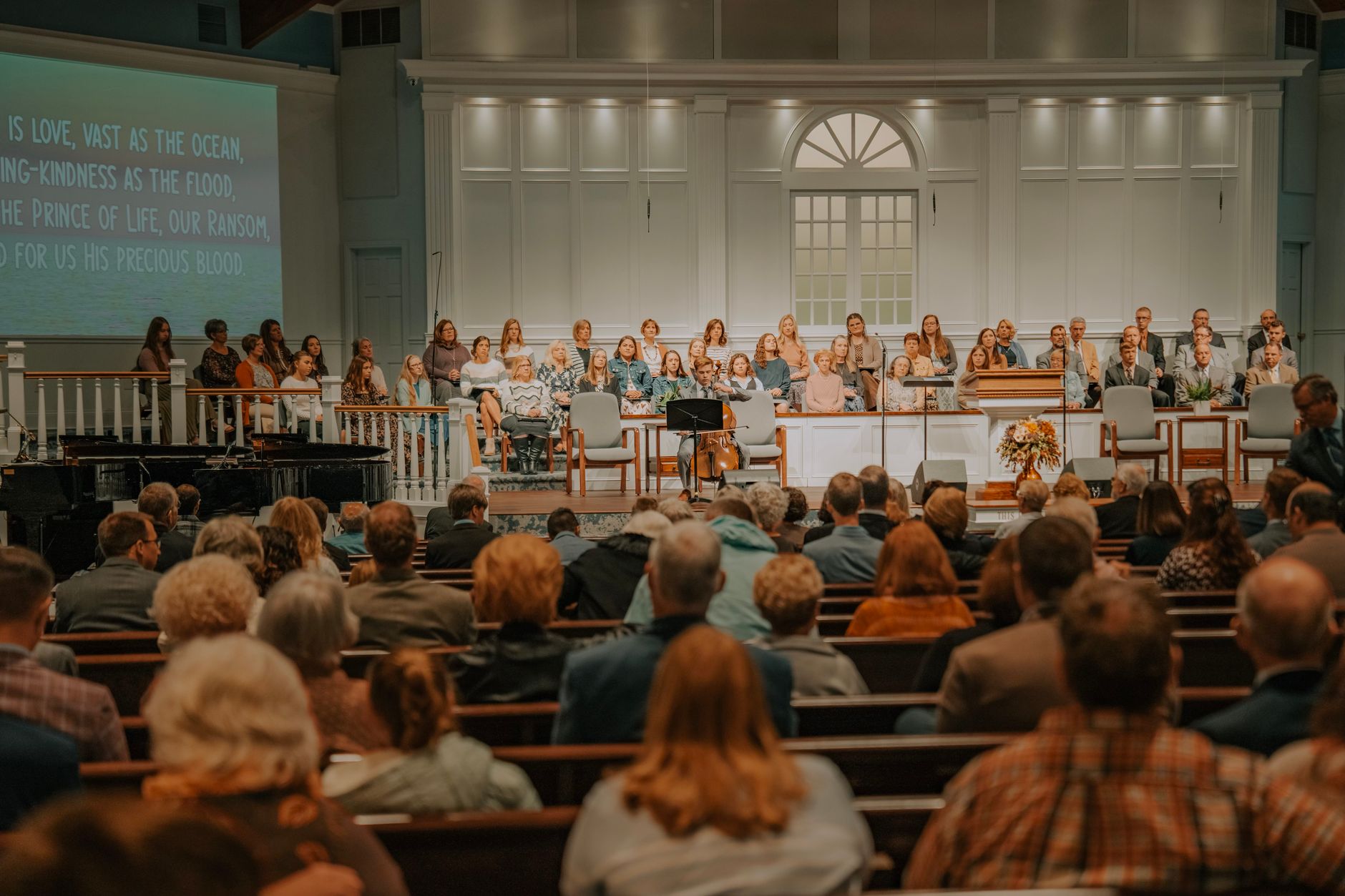
Costs are modest and predictable. Term fees of £30 to £90 cover ten to twelve rehearsals, working out at £3 to £8 an evening, which undercuts most gym classes. Monthly-subscription pop choirs charge £25 to £35, and many groups offer concessions of 30 to 50 per cent for students and pensioners.
Sheet music is the variable expense. Choral societies expect you to buy or hire vocal scores: a Novello Messiah costs around £14, while hire schemes run at £3 to £6 per work per term. Pop and gospel choirs supply arrangements under a blanket copyright licence, so the cost disappears into your subscription.
Concert dress need not be expensive. The best charity shops in london — the Mary’s Living and Giving branches, or the Oxfam boutiques in Notting Hill — stock black dresses and dinner jackets for £10 to £25. Donating clothes to charity uk shops once you outgrow your concert blacks neatly closes the loop.
Commitment is the real currency. Most choirs ask for 80 per cent attendance in the six weeks before a concert and treat the final two rehearsals plus the afternoon sound check as compulsory. Miss those and you sit the performance out. Otherwise, one evening a week from September to Easter is standard.
From Singer to Volunteer: Choirs and Wider Community Life
Choirs sit inside a wider web of local volunteering, and members get pulled into it quickly. A group singing carols outside a supermarket in December is usually collecting for an organisation its own members support, so plenty of singers first discover how to volunteer at food bank sessions through a Christmas collection rota.
That connection runs deeper than tins. The uk food bank referral process works through vouchers issued by GPs, schools and support workers rather than walk-ins, which surprises most first-time donors. If you have ever wondered about a community fridge, how it works is far simpler: surplus stock sits in an open chiller and anyone may take it.
The same faces recur across every local project. In a 60-voice choir you will typically find a parish councillor, someone starting a community garden UK councils have leased a scrap of land for, and someone who has answered the neighbourhood watch scheme how to start question for their own street: six willing neighbours, a free registration and window stickers.
Committees eventually confront how to set up a charity properly, since a Charitable Incorporated Organisation registers with the Charity Commission once annual income passes £5,000. Members with teaching backgrounds explain how to become a school governor over coffee, and anyone who has learned how to run a village fete will already know your choir owns the 2pm slot.
How Long Does It Take to Feel Confident in a Community Choir?
Most new members report feeling settled after six to eight rehearsals, roughly half a term. The first two evenings are the hardest because you are simultaneously learning the seating plan, the warm-up routine and where your voice part sits in the sound. By week four you will usually know one full piece from memory. Choirs that supply part-dominant rehearsal tracks — a recording where your own line is mixed louder than the others — accelerate this considerably, often halving the settling-in period. Practising 15 minutes on three separate days beats one 45-minute session, and singing along in the car counts as genuinely effective preparation.
Is It Possible to Join if You Cannot Read Music?
Yes, and the majority of community choir members cannot read music fluently. Non-auditioning choirs teach by call-and-response: the director sings a phrase, the section copies it back, and the parts are layered together until the harmony locks. Printed scores act as a map rather than an instruction manual, so following the rising and falling shape of the notes is enough to keep your place. If you would rather learn properly, most choirs run a free 30-minute theory session before rehearsal once a term, and ear-training apps cost around £4 as a one-off purchase. Barbershop and gospel groups work almost entirely without notation.
What Should You Wear to Rehearsals and Concerts?
Rehearsals are informal: layers, comfortable shoes and a bottle of water cover everything, since a warm hall and 60 singers generate real heat within 20 minutes. Concert dress is far stricter. The usual standard is all-black with one coloured accessory chosen by the choir — a scarf, tie or sash — costing £8 to £20 and bought in bulk by the committee. Black trousers, a black top and closed black shoes satisfy most requirements, and second-hand rails remain the cheapest source. Avoid heavy perfume, jangling jewellery and squeaky soles, all of which carry alarmingly well in a quiet church acoustic.